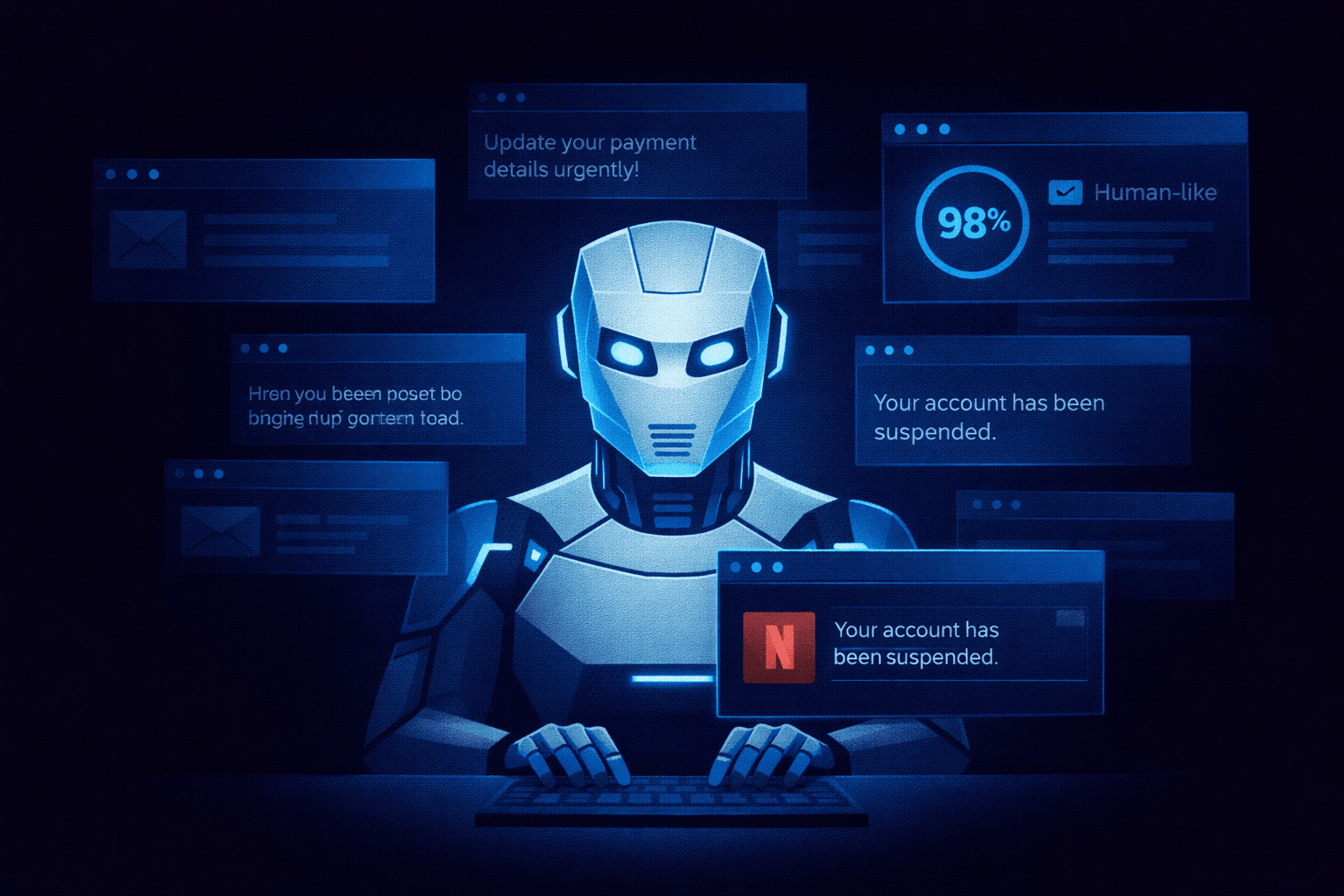
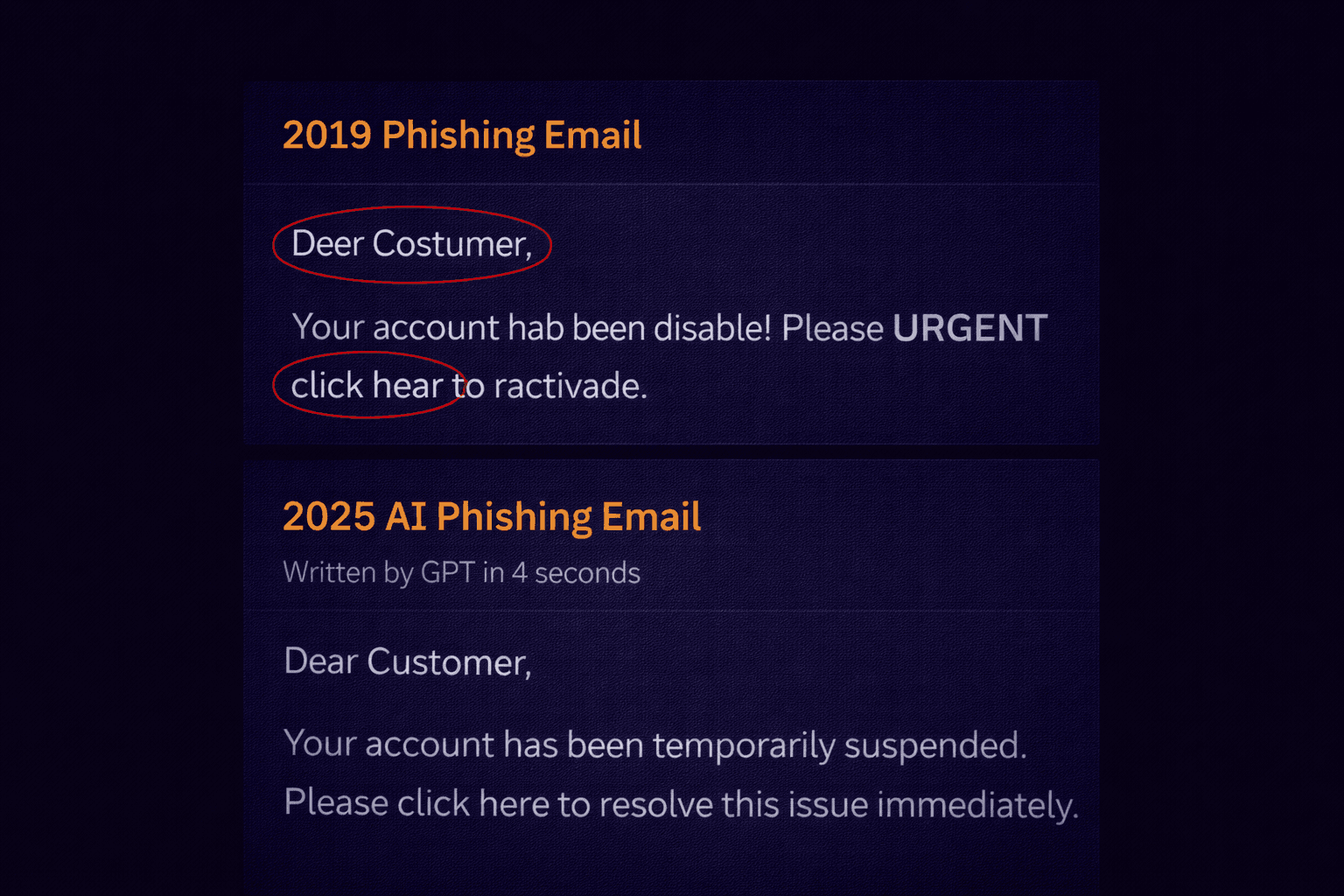
For years, the best advice for spotting a phishing email was: "Look for bad grammar and spelling mistakes." That advice is now obsolete.
Generative AI tools like ChatGPT and specialized "Dark Web LLMs" (like WormGPT) allow attackers to craft perfect, persuasive, and context-aware emails in seconds.
The "Prince of Nigeria" is Gone
We all remember the old 419 scams: broken English, bizarre stories about gold bullion, and random capitalization. They were easy to mock and easier to spot.
The New Reality:
Hi Sarah,
I hope you had a great weekend. I'm currently finalizing the Q3 audit reports and noticed a discrepancy in the attached vendor invoice. Could you please review and authorize the correction before 2 PM? We need this cleared for the board meeting."
This email has perfect grammar, professional tone, and specific context ("Q3 audit", "board meeting"). It was generated by an AI instructed to "Write an urgent email from a CFO to a Controller."
How AI Supercharges Phishing
1. Perfect Translation
Attackers from non-English speaking countries can now generate native-level text in English, German, French, or Japanese instantly. The language barrier that protected us for 20 years has evaporated.
2. Dynamic Context (Spear Phishing)
Attackers feed the AI data from your LinkedIn profile.
"Write an email to John mentioning his recent promotion to VP and the charity golf event he attended last week."
The resulting email feels incredibly personal and trusted.
3. Infinite Variations
Security filters work by recognizing known bad templates. AI can rewrite the same scam in 1,000 different ways, bypassing signature-based detection.
How to Defend Against AI
If we can't rely on typos, what's left? Context and Protocol.
1. Verify the Request, Not the Style
Whatever the email says, ask yourself: "Is this request normal?"
Does your CEO usually ask for gift cards via email? Does the vendor usually change bank accounts on a Friday afternoon?
2. Check the Technical Headers
AI can write the body of the email perfectly, but it cannot (yet) forge the DKIM signature or the Originating IP.
The email might sound like your boss, but if the header says it came from a server in Russia (`.ru`) or a free Gmail account, it is a scam.
Don't Trust the Words. Trust the Code.
AI can fake style, but it can't fake cryptographic signatures. Look behind the perfect grammar and see the true sender.
Analyze the Technical Headers